
Plumbing · Harrow, London
Boiler & Hot Water Repair in Harrow, London
Open the airing cupboard of almost any older Harrow home and you are looking at the real reason so many heating calls come in. What sits in there — a stored cylinder, an immersion element, the pipework feeding both — is where the borough's water does its slow damage, long before the boiler on the wall ever throws a fault. When Emergency Plumber Harrow coordinates boiler and hot-water work across that stock, the first question is rarely the boiler itself but what the system behind it has been quietly furring up.
Harrow's housing makes that a two-sided job. Up on Harrow-on-the-Hill, steep conservation-bound period houses tend to run older cylinders and legacy pipework, and even where a boiler could be replaced, the conservation area constrains flue positions and discreet siting so the work needs more thought than a straight swap. Out in the Metro-land semis of Pinner and Rayners Lane, whole streets of standardised 1920s and 1930s houses reach the same early-copper systems and scaled cylinders at roughly the same age — a district that comes up for like-for-like heating work almost in waves.
Underneath both is the water. Affinity Water supplies the whole borough at about 363 mg/l calcium carbonate, classified very hard and well above the UK average, and that is a harder supply than most of London contends with. Calcium scale furs heat exchangers, cakes hot-water cylinders and crusts immersion elements steadily, so a Harrow boiler losing pressure, cutting out under load or running lukewarm is far more often a scale story than a broken-part story. Diagnosing which is the entire point of the visit.
Any gas-adjacent part of the work is carried out to the Gas Safety (Installation and Use) Regulations 1998 — the standard governing how the work is done, not a badge on the front panel. A boiler that has cut out completely, with no hot water at all, is treated as a same-day priority. Call 07414 128324 and we get someone looking at what is genuinely wrong before anyone assumes a full replacement is the only answer.
What We Do
Where a Harrow Boiler Call Actually Goes
Nearly every breakdown traces to scale, a failed component, or both — so diagnosis comes first, and no part is replaced before the cause is confirmed.
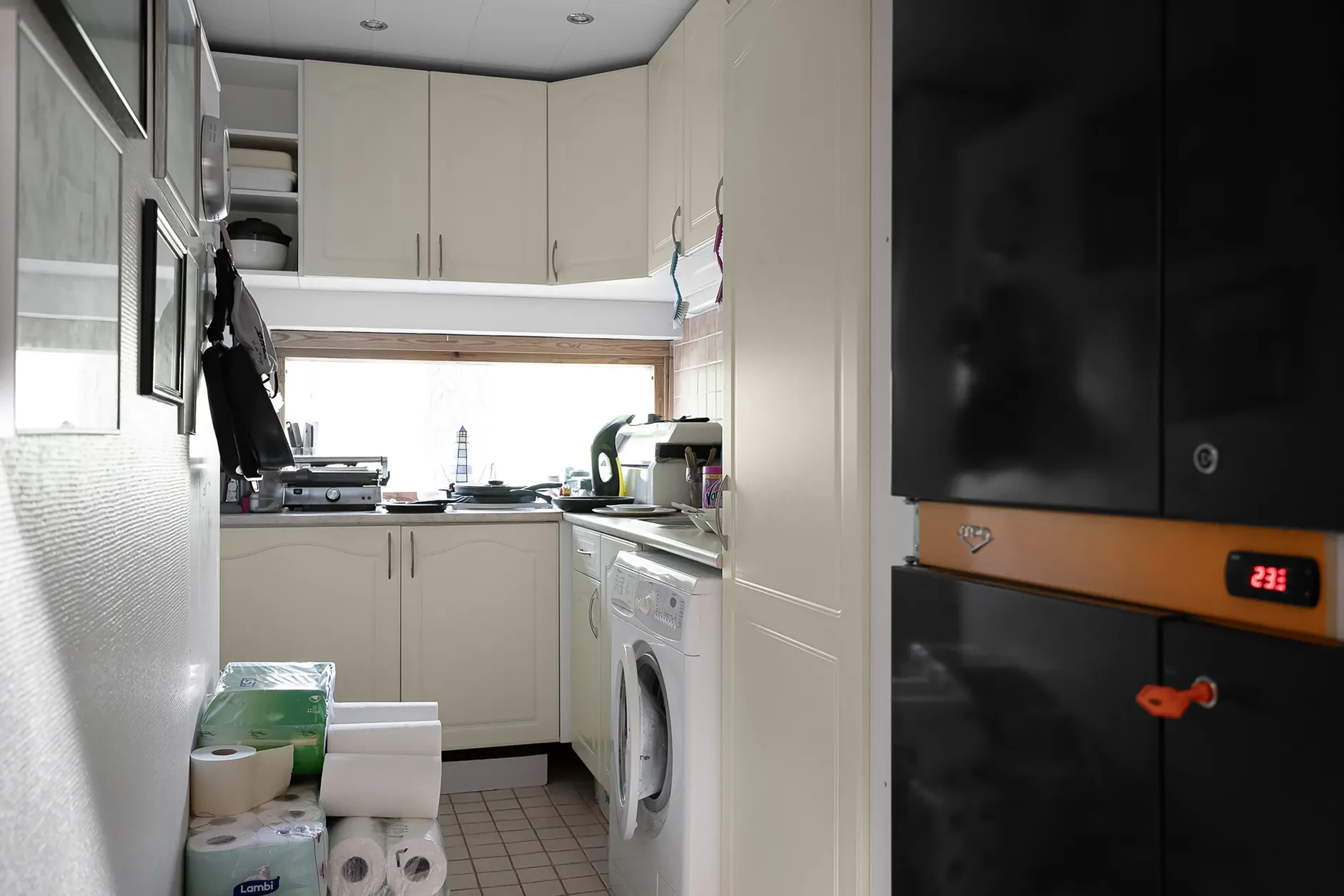
Power Flushing the Whole System
A power flush pushes fast-moving water and cleaning agents around the entire circuit at once — every radiator, the pipework between them and the heat exchanger — lifting out the scale and black sludge a yearly service can never reach. On a 363 mg/l supply it is the treatment that goes after the underlying cause instead of chasing whichever part the debris has choked this time.
The tell-tale signs are radiators cold along their bottom edge, a system that stays noisy after servicing, or efficiency that keeps slipping — the very-hard-water symptoms Harrow throws up most often.
Cylinders & Immersion Heaters
In the Hill's period houses and the Metro-land semis of Pinner and Rayners Lane, the hot-water cylinder often outdates the boiler feeding it, and a scaled or tired immersion element is among the most frequent reasons the water turns tepid or comes and goes. Renewing the element — or the cylinder itself where it has gone — brings full hot water back without disturbing the boiler.
Because Harrow's water is so hard, an immersion furs up and loses output well before it fails outright, so the decline is gradual and easy to live with until it is not.
Breakdown Diagnosis & Repair
A unit that has dropped its pressure, locked out on a fault code or died altogether is worked out on site before a single part comes off, because a limed-up heat exchanger and a dead pressure sensor look alike from the outside yet call for opposite fixes. A modern combi in a newer Harrow flat and an older system boiler in the period stock each fail on their own terms, and a fault code is a lead to confirm, not a verdict to act on.
Most ordinary repairs — a new valve, a re-pressurised vessel, an airlock cleared — are sorted the same day once the fault is pinned down.
The Benefits
Why Fixing the Cause Beats Swapping Parts
Very hard water is the one constant here, so any repair that steps around the scale tends to reappear within a year wearing a fresh symptom.
Fewer Return Visits on Tired Cylinders
The elderly cylinders and pipework in the Hill's period houses and the Metro-land semis all draw the same very hard supply that limes up every boiler in the borough, so going at the scale itself — rather than only the fault it is currently producing — heads off the annual mid-winter failure for the identical reason. Where a whole run of Rayners Lane semis hits that age together, treating the underlying system now saves the repeat call next season.
No Part Fitted Before the Fault Is Named
The written figure lands after the diagnosis, never before it: the call-out opens at about £80, and the repair price answers the actual fault instead of a guess made down the line. Fitting a part that was never the trouble only postpones the true repair and bills you twice over. On a system this quick to scale, holding that line matters more than it would on soft water.
Gas Work to the 1998 Regulations
Anything gas-adjacent is done under the Gas Safety (Installation and Use) Regulations 1998, which set out how the work must be carried out whatever brand hangs on the wall. That floor is the same for a same-day breakdown and a booked power flush alike. It is a description of how the job is done, not a claim pinned over the top of it.
Why Us
Why Harrow Calls Us for Heating
One very hard supply does the same thing to every boiler in the borough, and the repair is built around that.
We Know What Each District Keeps Cupboard-Side
Older cylinders behind the Hill's conservation-bound walls, the uniform Metro-land systems of Pinner and Rayners Lane, and modern combis in Harrow's newer flats each conceal something different. Arriving with a sense of which one we are walking into cuts the guesswork once the cupboard is open, and on the Hill it means turning up already mindful of the flue and siting limits a conservation setting imposes.
We Chase the Scale, Not Just the Symptom
A boiler that trips, sheds pressure or runs tepid points back to one shared culprit across most of Harrow — Affinity's very hard 363 mg/l supply — yet the correct repair still hinges on which component gave first, which we settle on site before quoting rather than reading off a fault code. Guessing at scale costs as much as ignoring it does.
One Line Covers the Whole Borough
From the period houses on the Hill out to the Metro-land semis of Pinner and Rayners Lane and the terraces of Wealdstone, the engineers we coordinate handle boiler and hot-water work across the whole service area on 07414 128324 — see the rest of what we cover here.
Heating faults seldom arrive on their own — see leak detection if the pressure keeps sinking with no wet patch to show for it, or our full services for the rest of what we cover. The same boiler and hot-water cover reaches Wealdstone, Pinner and Rayners Lane on the same terms as the hilltop core.
Frequently Asked Questions
Why do boilers fail more often in Harrow than in soft-water areas?
Affinity Water rates the whole borough's supply very hard, near 363 mg/l calcium carbonate — well over the national average and harder than much of London. That mineral load builds scale inside heat exchangers, cylinders and pipework year on year, and a limed heat exchanger cannot pass heat efficiently, so it shows as a boiler that runs tepid, trips under load or keeps bleeding pressure. It is the biggest background cause of heating calls here, and it has nothing to do with which make of boiler you own.
What should I expect to pay for a boiler repair?
The diagnostic visit opens at roughly £80, and the repair itself is put in writing once the fault has been found on site, so the number answers a confirmed problem rather than a phone estimate. A simple swap — a valve, a sensor, a cleared airlock — sits low; a more awkward fix on an ageing or boxed-in unit runs higher. The price always comes after the diagnosis; nothing is costed sight-unseen.
What is a power flush, and would mine benefit from one?
A power flush circulates high-velocity water and chemical cleaner through the whole system — radiators, connecting pipework and the boiler's heat exchanger — to shift the scale and sludge an ordinary service leaves behind. It earns its place where radiators stay cold at the foot, the pipework knocks and gurgles, or efficiency keeps dropping despite regular servicing. With a supply as hard as Harrow's, plenty of systems reach that point eventually, but it is worth pinning the cause down first rather than flushing on spec. Fitting a new boiler onto an old, sludged system without a flush is also a common way to shorten the new unit's life, so where a replacement is on the cards we raise the flush as part of the same conversation.
My boiler has died and there is no hot water — is that urgent?
Yes — losing all heating and hot water is handled as a same-day priority, all the more so in cold weather or where there are young children or anyone unwell in the house. Ring 07414 128324 and we get an engineer onto the fault rather than leaping to a replacement, since a scaled part or a failed sensor can frequently be put right that day. A boiler repeatedly locking out on the same code is best looked at before it stops entirely, not after.
Why is my hot water only lukewarm when the boiler seems fine?
Tepid water alongside a boiler that appears healthy usually implicates the cylinder or immersion rather than the boiler, particularly in the Hill's period houses and the Metro-land semis where the cylinder can be years older than the boiler serving it. A scaled or partly failed immersion sheds output slowly rather than cutting out, so the slide happens over weeks and is easy to miss. Establishing which component is the real fault avoids replacing a boiler that was never to blame.
Does the Harrow-on-the-Hill conservation area affect boiler work?
It can, chiefly where the work reaches the outside of the building. The Hill's historic core is a conservation area, so a flue position, external siting or any street-facing change may need consent through Harrow Council rather than being freely chosen. Internal repairs and cylinder work are generally unaffected, but where a job would alter something visible outdoors, we raise it before quoting so a consent requirement is known at the start, not stumbled on mid-job.
How often should a boiler be serviced on water this hard?
A yearly service is the general rule anywhere, but on Harrow's very hard 363 mg/l supply scale accumulates in the heat exchanger faster than in a soft-water region, so an annual look catches trouble developing before it becomes a breakdown. The older cylinders in the Hill's houses and the Metro-land semis can also warrant a more regular check of the immersion in particular. Where a scale-reducer or an inhibitor has already been fitted the interval can be more relaxed, but the underlying water does not change, so the service still earns its keep. A routine check is a good deal cheaper than a call-out in the depths of winter.
What separates a combi from a system boiler with a cylinder?
A combi makes hot water the instant you draw it, with no storage cylinder, which suits Harrow's newer flats where space and pipe runs are short. A system or conventional boiler — more usual in the larger period houses and the Metro-land semis — heats water and holds it in a separate cylinder, typically in an airing cupboard. They break down differently: a combi fault is usually the appliance, while a stored-water fault might be the boiler, the cylinder or the immersion, which is why the diagnosis starts in a different place for each.
Why do whole Rayners Lane streets seem to need heating work at once?
Rayners Lane went up rapidly in the 1930s as a standardised Metro-land estate, so streets of near-identical semis carry systems of the same age and design fitted within a few years of one another. Their cylinders, immersions and early-copper pipework therefore wear out on roughly the same timetable, and on Affinity's very hard water they scale to the same schedule too. That is why the area comes up for like-for-like boiler and cylinder work almost street by street rather than one house at a time.
Could a hidden leak be behind my boiler losing pressure?
Yes — a slow escape anywhere in a sealed heating circuit reads as a boiler forever shedding pressure and wanting topped up, even with nothing obviously wet. It is one of the more common cases where a booking that begins as a boiler fault turns out to be leaking pipework instead. Our leak detection & repair page explains how we trace that without tearing the place apart, once it is clear the boiler is not the culprit.
Will you be straight with me about repair versus replacement?
Yes — if a boiler is old enough and the fault big enough that repeated repairs are likely, we say so plainly rather than charge for a patch unlikely to last. That conversation comes after the diagnosis, with the real fault and its cost set out, so you decide with genuine numbers in front of you. Age, whether parts are still available and how far the scale has bitten all feed into it, and we lay them out rather than steer you toward the larger job.